The 4th Pillar of Education for Your Child’s Future
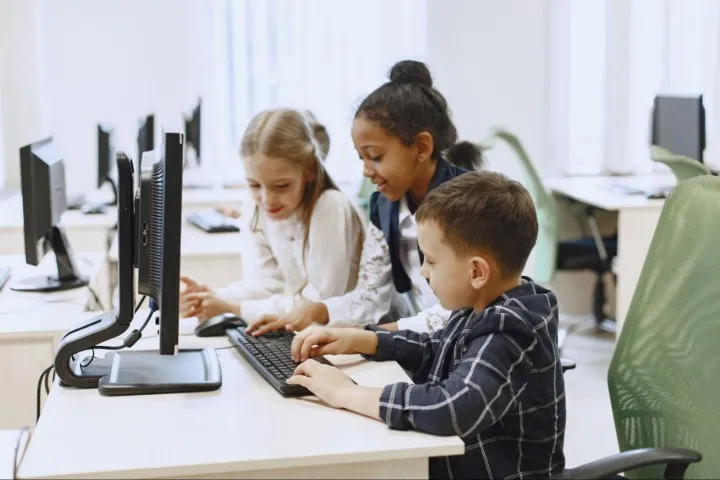
Back to school and as the new school year kicks off, parents everywhere are reviewing schedules, buying supplies, and considering extracurricular activities. While sports, music, and art are traditional go-tos, there is another after-school option gaining massive momentum: learning to code.
Beyond just screen time or tech skills, computer science offers foundational value that directly enhances classroom learning and sets kids up for long-term success.
1.Coding: The "fourth pillar" of education
For generations, primary education rested on three foundational pillars: Reading, Writing, and Mathematics. However, as artificial intelligence and automation rapidly reshape our world, educators and experts agree that computational literacy is joining these core skills as the fourth pillar.
Our CEO and Founder Elizabeth Tweedale featured in an article on Parent Herald, reporting that 9 out of 10 parents want their children to learn computer science, yet fewer than half of high schools currently offer it.
Coding isn't just about training future software engineers - it’s about giving children the tools to understand the digital world they navigate daily. Just as we teach children to read without expecting them all to become authors, computational thinking teaches kids how to analyze systems, identify logical errors, and become creators of technology rather than passive consumers.
2. Supercharging classroom performance
Learning to code directly supports and enhances what kids are already learning in school across multiple subjects:
Math & Problem-Solving: Concepts like loops, variables, and conditional logic give abstract mathematical ideas tangible applications. When building a game, kids naturally use arithmetic, coordinates, and geometry.
The Scientific Method: Debugging broken code is a direct application of the scientific method. Children hypothesize where the code went wrong, test solutions, analyze results, and refine their work - learning to embrace failure as part of the process.
Creativity & Communication: Designing interactive projects lets children bring their imaginations to life while learning to articulate complex ideas clearly.
To learn more about how programming builds core academic skills, read the full breakdown on How Learning to Code Enhances Your Child's Education.
3. How kids learn best: The spiral curriculum
One common concern for parents is whether coding is too complex or stressful for young learners. The key lies in how it's taught.
Rather than forcing children to memorize rigid syntax or complete one-off lessons, effective computer science programs use a Spiral Curriculum. As detailed in Coco Coders' guide on Our Spiral Curriculum, fundamental concepts like loops and variables are revisited repeatedly through new, engaging themes over time.
By applying the same core concepts to fresh projects - ranging from simple animations to full interactive games - kids build deep, long-term mastery without feeling overwhelmed. This approach accommodates different learning styles, accommodates missed classes, and keeps the experience fun and rewarding.
4. Making extracurriculars count this school term
When picking after-school activities, parents look for options that build confidence, foster social connections, and encourage critical thinking.
Online coding classes in small, age-appropriate groups allow kids to collaborate with peers, share feedback, and solve problems together. Whether through block-based languages like Scratch for younger kids or text-based languages like Python and JavaScript for older students, coding provides a structured yet creative outlet.
As highlighted in Coco Coders' article on Back-to-School Extracurricular Activities for Kids, starting early (ages 6 to 12) gives children a head start in developing logical reasoning, focus, and adaptability - skills that benefit them in school and far into their future careers.
Useful resources for further reading
If you want to explore more about how learning computer science impacts your child's cognitive growth and STEM skills, check out these helpful guides:
How Learning to Code Is Like Learning a Foreign Language – Discover the fascinating parallels between coding syntax and language learning, and how mastering both builds memory, pattern recognition, and communication.
3 Ways Coding Helps Kids Learn Mathematics – Learn how coding brings abstract math concepts to life through hands-on logic, spatial awareness, and problem-solving.
Ready to give your child a head start this term?
Whether your child dreams of creating their own video games or simply wants a fun new after-school challenge, coding offers a powerful blend of learning and play.
Explore our online classes and get 50% off your first 4 classes at Coco Coders to get started this school year!